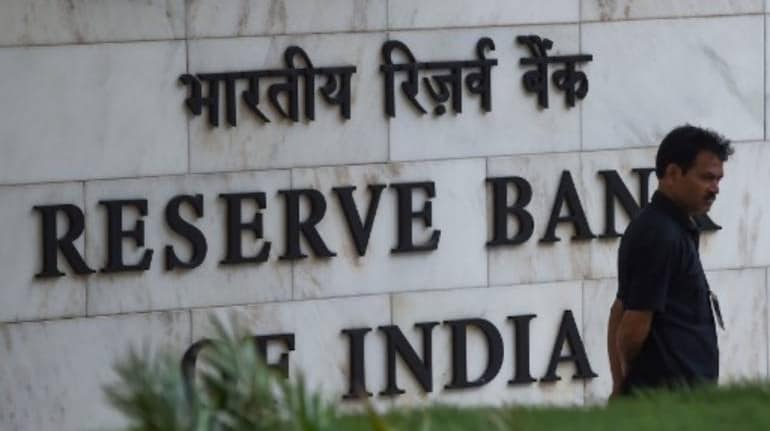
The Reserve Bank of India (RBI) on December 14 issued prompt corrective action (PCA) framework for non-banking finance companies (NBFCs) by introducing three risk threshold categories.
PCA refers to restrictions imposed by the banking regulator on a lender's operations if the key financial parameters of these entities fall below a certain limit. Till now, the RBI used to impose PCA only on banks. The central bank had issued the revised Prompt Corrective Action (PCA) Framework for Scheduled Commercial Banks (SCBs) on November 2, 2021.
But, with the NBFCs too growing in size and complexity, the banking regulator felt it is necessary to introduce similar framework for NBFCs as well.
"NBFCs have been growing in size and have substantial inter-connectedness with other segments of the financial system. Accordingly, a PCA framework for NBFCs has also been put in place to further strengthen the supervisory tools applicable to NBFCs," the RBI said.
The framework will apply to all deposit-taking NBFCs, excluding government companies, all non-deposit taking NBFCs in middle, upper and top layers, the RBI said.
The PCA framework for NBFCs will come into force on October 1, 2022, based on the financial position of NBFCs on or after March 31, 2022, the RBI said.
Risk thresholdsAccording to the RBI framework, the apex bank will impose PCA on NBFCs if there is any breach of risk threshold.
For instance, if the Capital to Risk (Weighted) Assets Ratio (CRAR) falls up to 300 bps below the regulatory minimum CRAR, Tier-1 capital ratio falls up to 200 bps below the regulatory minimum and Net NPA (non-performing assets) ratio goes beyond 6 percent, the NBFC will fall under risk threshold -1.
The RBI will then impose restrictions on various business operations and will conduct special inspections and targeted scrutiny of the company. For an NBFC under threshold-1, the RBI will impose restrictions on dividend distribution/remittance of profits; also there will be restrictions on the issue of guarantees or taking on other contingent liabilities on behalf of group companies.
Similarly, if the CRAR falls more than 300 bps but up to 600 bps below the regulatory minimum, and the tier-1 capital ratio falls more than 200 bps but up to 400 bps below the regulatory minimum and net NPA shoots up beyond 9 percent, the NBFC will fall into risk threshold-2.
For such companies, in addition to the restrictions mentioned above, the RBI will impose restrictions on branch expansion, the central bank said.
If the CRAR falls 600 bps below the regulatory minimum, the tier-1 capital ratio falls more than 400 bps below the regulatory minimum and the net NPA is greater than 12 percent, the NBFC will fall in the risk threshold-3 category.
In such cases, in addition to the mandatory actions of threshold 1 and 2, the RBI will take appropriate restrictions on capital expenditure and will impose restrictions on variable operating costs.
Once an NBFC is placed under PCA, taking the NBFC out of PCA framework or withdrawal of restrictions imposed under the PCA framework will be considered if no breaches in risk thresholds in any of the parameters are observed as per four continuous quarterly financial statements, one of which should be annual audited financial statement, the RBI said.
Also, this will be based on the supervisory comfort of the RBI, including an assessment on sustainability of profitability of the NBFC, the RBI said.
Discover the latest Business News, Sensex, and Nifty updates. Obtain Personal Finance insights, tax queries, and expert opinions on Moneycontrol or download the Moneycontrol App to stay updated!
Find the best of Al News in one place, specially curated for you every weekend.
Stay on top of the latest tech trends and biggest startup news.