

Mutual Funds
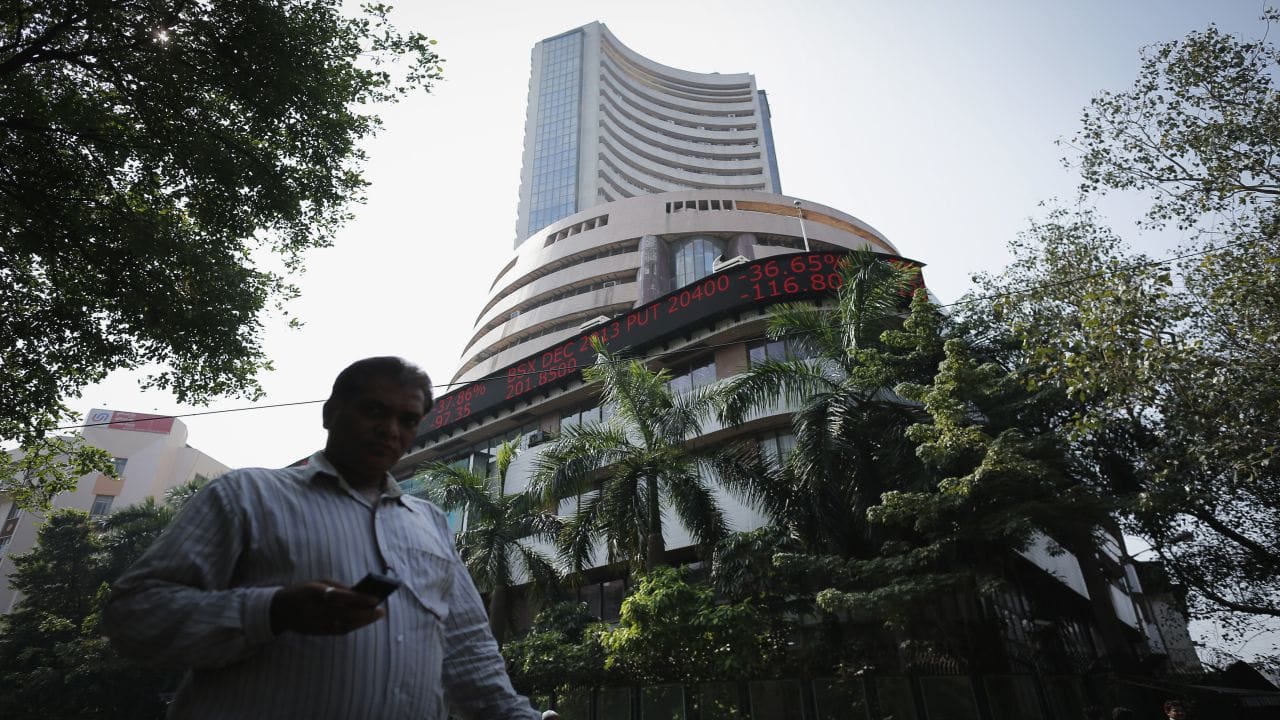
Mutual funds bought financial stocks worth nearly Rs 55,413 crore in March, accounting for 49 percent of their total secondary market inflows during the month, even as Indian markets witnessed a sharp correction amid rising tensions in the US-Iran-Israel conflict. Overall, mutual funds were active buyers in the secondary market, purchasing stocks worth nearly Rs 1.13 lakh crore in March. Despite the buying, total mutual fund assets fell to Rs 46.6 lakh crore from Rs 51.29 lakh crore in February. However, mutual funds’ share in total market capitalisation improved to 11.3 percent from 11.1 percent a month earlier. The strong buying in financial stocks came despite a sharp selloff in banking shares. The Nifty Bank fell 17 percent in March, while the Nifty Financial Services declined 15.6 percent. Both indices recorded their sharpest monthly fall since March 2020. Financial stocks remained under pressure amid concerns that rising sovereign bond yields could result in mark-to-market losses on banks’ government securities portfolios. India’s 10-year bond yield rose more than 37 basis points in March to cross 7 percent, touching a one-year high. The rise in yields was driven by escalating geopolitical tensions, the ongoing US-Iran-Israel conflict and higher crude oil prices, which reignited inflation concerns. The outlook for the financial sector was also weighed down by the Reserve Bank of India’s actions in the currency market and the broader impact of rising energy costs, which have hurt profit expectations. The RBI’s efforts to defend the rupee near record lows have also constrained liquidity injection, tightening financial conditions. Apart from financials, mutual funds were also strong buyers in consumer discretionary stocks, where they bought shares worth Rs 16,366 crore. Telecom stocks saw inflows of Rs 14,656 crore, while IT stocks attracted Rs 5,717 crore. Other key sectors that saw mutual fund buying included commodities, with purchases at Rs 4,883 crore, healthcare at Rs 4,178 crore and industrials at Rs 4,139 crore. FMCG stocks saw inflows of Rs 3,795 crore, while services attracted Rs 3,548 crore. Indian markets saw a broad-based correction in March amid geopolitical tensions. The benchmark BSE Sensex and Nifty 50 each fell 11.5 percent. The BSE MidCap 150 declined 10.8 percent, while the BSE SmallCap 250 fell 10.3 percent. In contrast, foreign institutional investors were heavy sellers, offloading nearly Rs 1.26 lakh crore worth of equities in the secondary market during March. Of this, nearly Rs 60,000 crore was sold from financial stocks, followed by Rs 12,500 crore worth of auto shares. Construction and metal sectors saw FII outflows of Rs 9,154 crore and Rs 3,165 crore, respectively. FMCG and consumer services saw selling of Rs 5,419 crore and Rs 2,141 crore, while realty and healthcare witnessed outflows of Rs 4,693 crore and Rs 4,638 crore. Telecom and construction materials saw FII selling of Rs 5,603 crore and Rs 3,144 crore, while services, oil and gas, and consumer durables recorded outflows of Rs 2,575 crore, Rs 4,129 crore and Rs 2,900 crore, respectively. Overall, FII ownership in Indian equities fell to 15.14 percent in March from 15.5 percent in February, while total assets under custody declined to Rs 62.46 lakh crore from Rs 71.78 lakh crore.
Apr 16 2026, 05:01
Apr 15 2026, 10:55
Apr 13 2026, 05:01
Apr 13 2026, 05:01
Discover Mutual Funds
Mutual funds simplify investing - we make it smarter. Powered by research and intelligent tools, we help you find the best funds to invest in.


Screeners












Explore All Mutual Funds
MF Industry: Holdings Insights
Sector Trend
Stock Trend
Stock Exposure
Search your choice of stock to know which Mutual Funds are holding them.
Videos
Login to view your Mutual Funds Portfolio details.


FAQ
What is a mutual fund?
Why invest in mutual funds?
Mutual funds offer investors access to diversified portfolios, professional management, and the ability to invest with relatively small amounts. They can help investors participate in different asset classes based on their financial goals and risk appetite.
What is an SIP?
A Systematic Investment Plan (SIP) is a method of investing in mutual funds where a fixed amount is invested at regular intervals, such as monthly or quarterly. SIPs help investors invest in a disciplined manner and spread investments over time.
How to select an equity mutual fund?
Selecting an equity mutual fund involves evaluating factors such as the fund’s investment objective, past performance, portfolio composition, expense ratio, and the fund manager’s track record, along with aligning the fund with one’s risk tolerance and investment horizon.
Mistakes to avoid while investing in a mutual fund
Common mistakes include investing without clear financial goals, ignoring risk levels, chasing short-term returns, not reviewing fund performance periodically, and failing to maintain proper diversification across asset classes.
Why do people buy mutual funds?
People invest in mutual funds to gain exposure to financial markets, benefit from professional management, and build wealth over time. Mutual funds also offer flexibility in investment amounts and options such as SIPs and lump sum investments.
What are the risks of investing in mutual funds?
Mutual funds invest in different instruments such as equities, debt, corporate bonds, etc. so the investments are exposed to market risks. The prices of these instruments can change due to market movements, interest rate changes, and economic factors, which may lead to fluctuations in returns and, in some cases, losses for investors.
What are some common mutual fund investing strategies?
Common strategies include long-term investing, systematic investing through SIPs, diversification across asset classes, and periodic portfolio review and rebalancing based on changing financial goals.
How do I buy and sell mutual funds?
Mutual funds can be bought and sold through online platforms, fund house websites, or registered intermediaries. Investments can be made via lump sum or SIP, while redemptions can be placed by submitting a sell or redemption request.